The Unknown

Those who know me, know that I get anxious when people are sick. I even get anxious at the thought of getting sick myself. So, when all of the news starting coming out about the virus a couple of months ago, I found my anxiety spiking. This is my worst nightmare. An unknown virus, that I am not immune to, that is highly contagious.

I started obsessing over the news. Constantly updating the world meter and map of where the virus was, untrusting of anybody. (A little over the top, I know. But to me, I was being proactive and protecting myself.) I was practicing social distancing before the government came out and suggested it. I was afraid.

I was worried for family and friends, as some work in the nursing homes as physical therapists, dealing with people everyday. I was worried for my grandparents, who are in their eighties. I was worried for my sister and fiance, who both work in businesses that aid the healthcare field, thus deeming them as “essential employees”.

What consumed a lot of my thoughts was my wedding. Slowly everything got cancelled. The bachelorette party, the honeymoon, the bridal shower…..

As the days progressed, and North Carolina was placed under a stay at home order, the thought of having the wedding in May is no longer likely. I was faced with a decision, and thus the wedding was postponed until July.

Is it hard knowing that I will have to wait an additional two months for something that I have been planning for over a year? Heck yes! But, there are two things that I have learned from this virus:

  1. my problems are small potatoes compared to what some other people are dealing with
  2. everything will work out

This virus has put a lot of things into perspective. Yes, I am sad about my own plans being cancelled. But, it’s a wedding that can wait. My cousin is pregnant and her baby shower is cancelled, that is something that can’t be indefinitely postponed. My mother’s retirement party was cancelled – something that only happens once- and that cannot be indefinitely postponed either, as she is set to retire by May 1.

Additionally, I found that my bridal store is closed for a month at least. So, a wedding in May was even more unlikely because there was a chance that my dress wouldn’t have been ready. July is warmer, but it is *hopefully* far enough out that everything will somewhat die down. It turns out the July date might be better after all.

Basically- this virus has taught me that I spend entirely too much time worrying about things that are out of my control. Ultimately, everything will work out how it’s meant to in the end- it always does.

The Unknown – A Haiku

Fear of the unknown

It takes so much energy

It will all work out

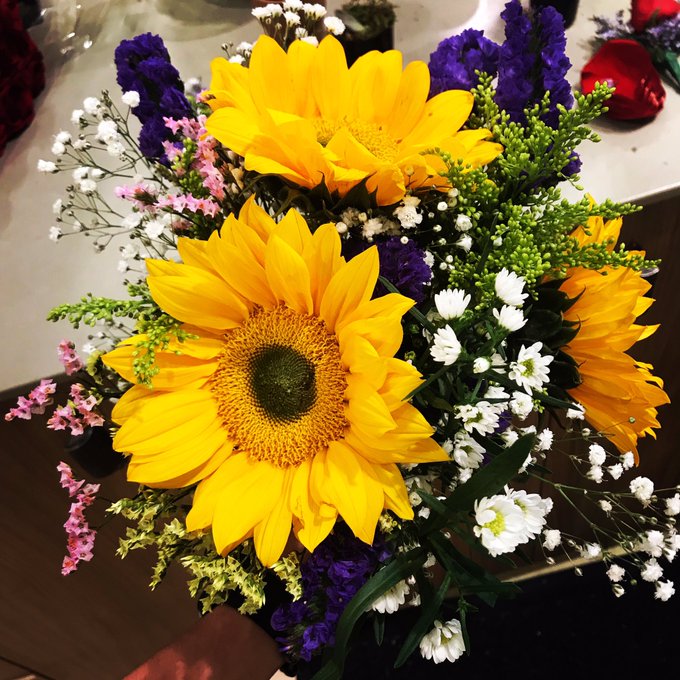
Small Potatoes- A Photoku

Spent a lot of time

On what has now been postponed

See you in July
Observational Poetry

Currently, North Carolina has a stay-at-home order that is effective for 30 days. Sometimes, it’s hard to find joy and inspiration when all you’re surrounded with is bad news.

I am fortunate in that there is a back patio and a yard for me to sit on where I am staying.

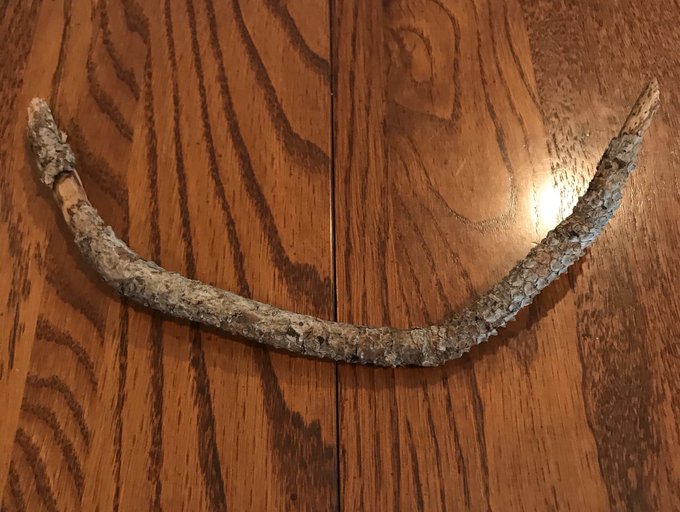
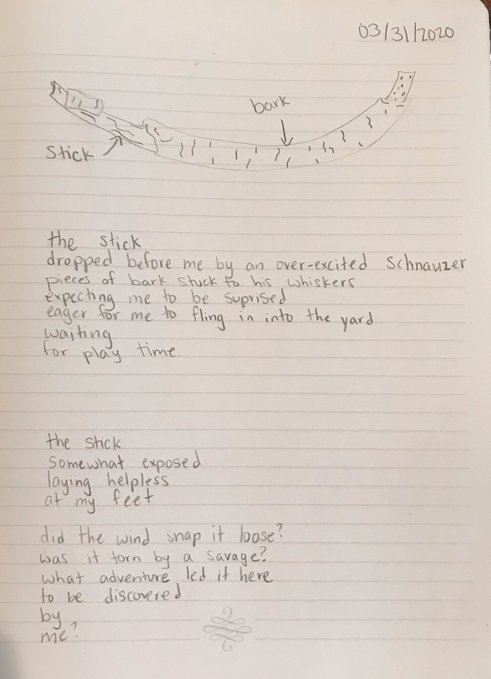
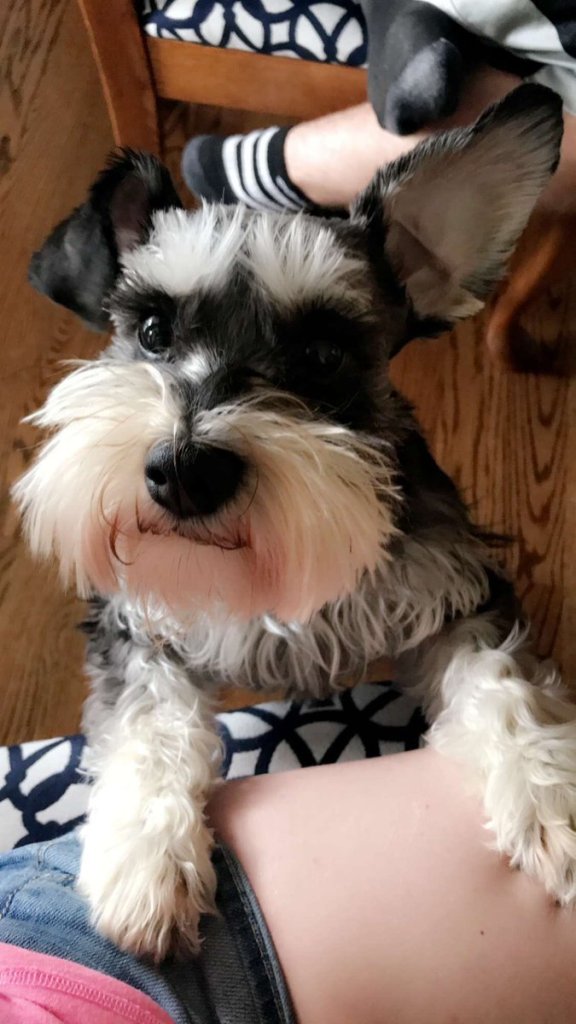
Today, it was gloomy, after so many consistent days of sun. Upon venturing outside, I did not see a flower, just grass and dirt. I took the dog outside, and he brought me a stick. I used the stick as inspiration for my poetry. I wrote two short poems. One poem is based on the stick and the dog’s perspective, and one is from my perspective, contemplating the stick’s existence. Both have been inserted below.

The dog – for reference 🙂

* Poetry Reflection *

My Own Personal Feelings

Reading Poetry

When in school, I resented poetry. There, I said it. I did not enjoy poetry. In school, poetry was always linked to comprehension questions. I also distinctly remember feeling like the questions were trick questions. The poems the questions addressed always had some hidden meaning that I could never quite figure out, and they seemed too philosophical for my taste.

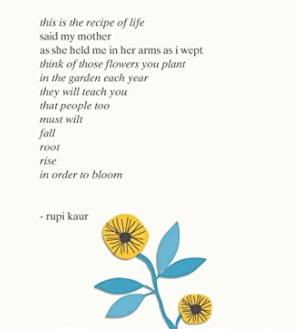
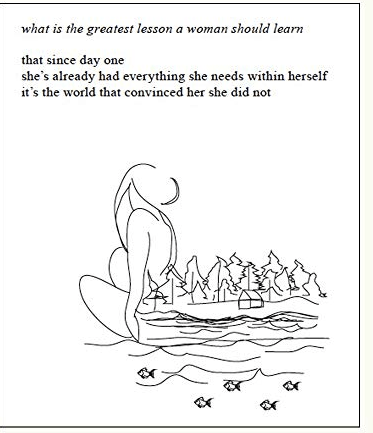
Now that I’m older, I’ve come to appreciate poetry more. I like reading The Sun and Her Flowers by Rupi Kaur. The poems evoke deep emotion and they make me think, but they aren’t tricky, like the poems were in school. Kaur’s poems also aren’t linked to questions, made to “test” my knowledge and interpretation. I think this is how poetry should be. Poetry is art. Art, is open to interpretation. Therefore, by the associative property, poetry is open to interpretation as well. So, there should not be questions to accompany the poems, because they can be interpreted differently by different people.

Kaur, R. (2017). The sun and her flowers. Kansas City, MO: Andrews McMeel Publishing.

Additionally, I enjoy reading poetry because it’s quick. With the way books are generally written (in paragraphs) I sometimes find myself having to go back and reread the text. With poetry, I find myself rereading it, but not because I’m lost in the words, but because I want to take another look at the poem. I find that I can read lots of poetry in the same amount of time that it takes me to read a small amount of blocked text, and it makes me feel empowered.

Writing Poetry

I don’t feel confident in my ability to write poetry. I understand that poems can be written in many different ways, and that poetry is subjective. However, I do not like the thought of composing poetry and having others read it. To me, poetry is personal and I’m not necessarily comfortable having other people read about topics that are so close to me.

Teaching Poetry

During student teaching, I “taught” poetry with my cooperating teacher in April. I put the word taught in quotations because I don’t feel that we actually taught it. The students I worked with, at the school I worked in, used the Ready book for reading. The Ready book contains passages and questions and sometimes tables for students to use when ‘interacting’ with the poem. I didn’t feel like there was any freedom when it came to teaching poetry.

Criteria For A Really Good Poem

In my opinion, a really good poem evokes emotion. When a poem makes you feel something, is when you know you’ve read a really good poem. I also find myself rereading really good poems, because I want to experience the poem again.

Poetry Environment

In order to create a poetry environment in the classroom, poems should be read often. Poems could also be incorporated in the day without having some sort of task attached to it. This way, students would be more focussed on the poem itself, and not the assignment that will come after. Additionally, reading your class poems before you start teaching poetry is a good way to create a poetry environment. If you only talk about poetry when it comes time to teach it, children might not feel that poetry is valued by you. They might feel that their teacher is simply teaching it because they have to, like anything else. However, if you talk about poetry more fluidly throughout the year, children will notice your love of poetry.

Children also need to be exposed to different types of poetry. It is a common misconception that poetry must rhyme. I wasn’t shown very many free verse or concrete poems, at least not in elementary school. Anything can be poetry. Showing children this flexible view on poetry may increase their confidence in writing it themselves.

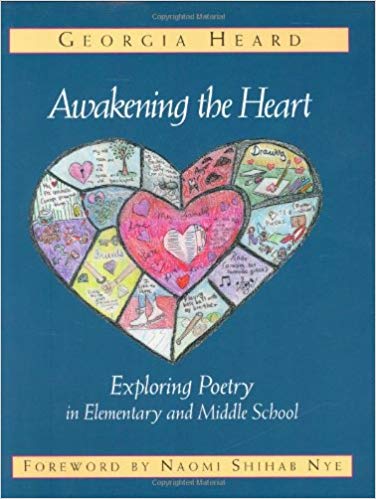
After reading chapters 1-3 of Awakening the Heart by Georgia Heard, I have learned some more approaches to creating a poetry rich environment. One teacher made a bulletin board that was titled, “What we say is poetry”. Whenever a student would say something that sounded like poetry, she would ask them to write it down and then it would be stuck on the bulletin board for everyone to see. After a little while of doing this, students would start catching others saying things that were ‘poetry’. Students became aware of the poetry around them, which is what I think a poetry environment does!

Heard, G. (1999). Awakening the heart: Exploring poetry in elementary and middle school. Portsmouth, NH: Heinemann.

Engaging Children in Writing

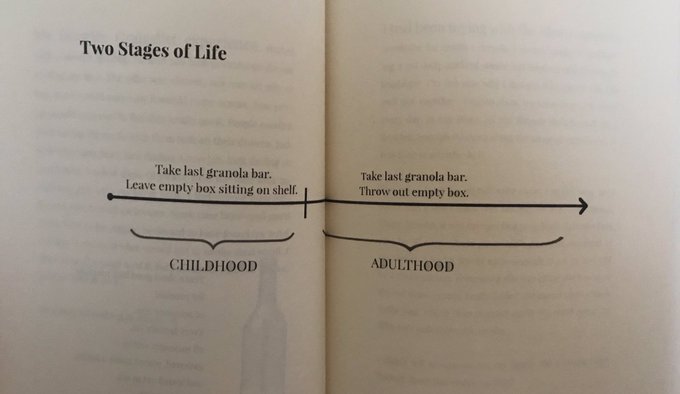
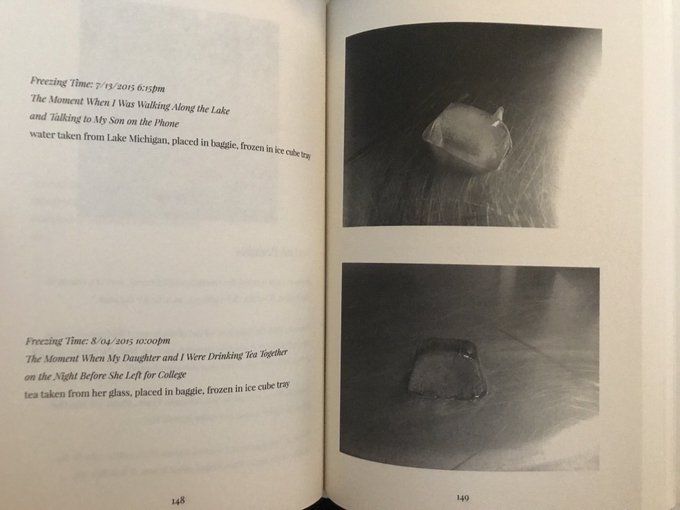
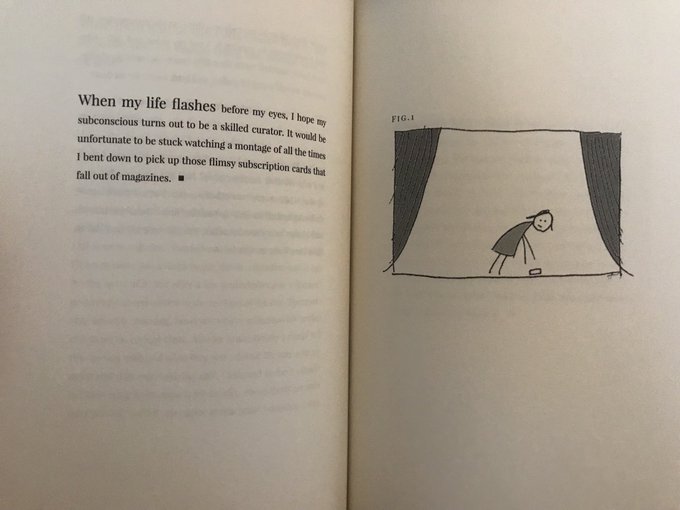
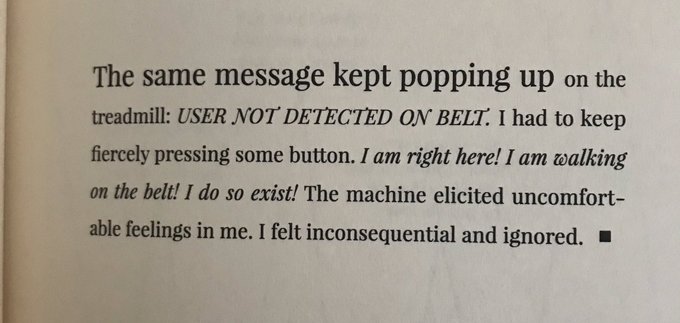
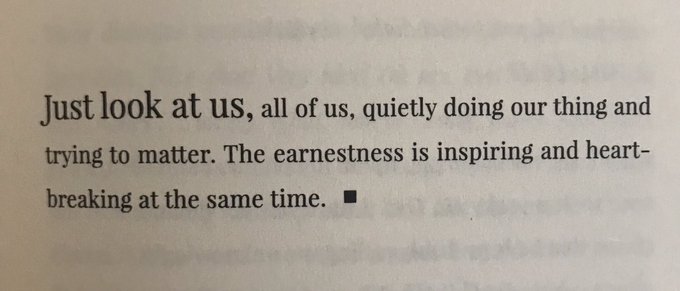
I’ve enjoyed reading Textbook Amy Krouse Rosenthal, so much so that I have finished the book in its entirety already. Rosenthal’s entries in the book are short and witty, making it an easy and delightful read. Some of my favorite spreads/pages are pictured below:

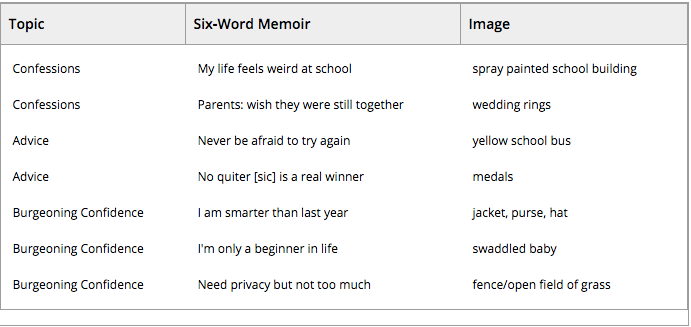
Rosenthal’s book showed me that anything can be a journal entry. Journal entries don’t have to be deep or long, they can be short and light-hearted (refer to the first and third images above). This idea is something that students should be shown/told as well. Students can be writers and not have long, elaborate entries. The six word memoir is a great example of this. A six word memoir is a group of six words that the author feels describes him/her. Expose students to examples of six word memoirs like the ones below:

Retrieved From: https://ila.onlinelibrary.wiley.com/doi/full/10.1002/trtr.1267

Allow students time to write their own memoirs and time to share with peers or the class. While students are working, you should be working on yours as well. Students need to see their teachers participating in the writing, as it portrays that writing is important. Also, the teacher will have a memoir to share with the class as well. My six word memoir is:

“STILL TRYING TO FIGURE IT OUT.”

I think that this memoir perfectly describes myself in the particular stage of life that I’m in. I’m in my early twenties and I’m about to transition from being a student to being a teacher. I’ve been a student my whole life and now I’m going to be a full time educator that’s on the other side of the classroom. I’m in the process of finding a job and figuring out where I’m going to end up. Nothing is set in stone yet- thus I’m still figuring things out.

After students have written their six word memoir, they may choose to illustrate their writing.

Jump Starting Writer’s Notebooks

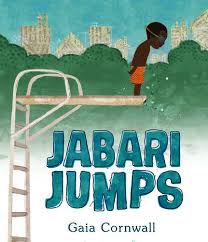
I’m continuing to discover the power of mentor texts and how they can help students in the classroom. This week, I read Jabari Jumps by Gaia Cornwall. Using this book, I worked with some peers to create a short lesson that aids students in identifying writing topics. We focussed on hand maps. For this activity, students trace their hand and assign each finger an emotion. Branching off from those fingers are instances where the student felt that particular emotion. These memories become writing ideas. To read through the lesson I designed, use the following link: https://docs.google.com/document/d/1c7gRPhfrmhwN6jAaxk8LLdcjU3uUXcSs2jpftD-2Boc/edit?usp=sharing

https://www.booksource.com/Products/Jabari-Jumps__9780763678388.aspx?FromSearch=True

Jabari Jumps is a good mentor text because Jabari experiences lots of emotions in this story. One could argue that he experiences excitement and fear, to name a few. Additionally, this book is about a small moment, which is what students are encouraged to write about, rather than writing a story about everything that happened in one day.

Before creating the lesson, and the hand map, I tried my hand at writing a small story. I was visiting my grandparents this past weekend, and so my small moment story was inspired by my grandma.

The Special Box

I’ve always loved visiting grandma’s, partly for all of the cliche reasons, like eating junk food and getting to do whatever I want, but also because of the tan Romeo and Juliet cigar box.

Upon my family’s arrival, usually after dinner, my sister and I would watch as my grandma got up from the table, and made her way over to the hutch in the corner of the room. We’d inch up on our heels and sit taller, our lips curled up to form a smile as we saw grandma reach for the box, all the while wondering what special gift would be inside of it this time. There was never any way of telling. Sometimes it’d contain handmade jewelry, other times acrylic paints and craft paper. All we knew was that the box held something special inside, something that grandma had picked out just for us.

What we liked about grandma’s gifts was that we each always got something different. She wasn’t afraid to get us different things, unlike our other relatives, who always gave us the same gift, but in different colors. Aly would always get green, and I would get the same exact toy or sweater, but in light blue.

We always treasured grandma’s gifts because they were thoughtful. Everything great we knew came from our grandma’s heart, and her cigar box.

I wrote about a super small moment that had special meaning to me. If/when sharing with students, I might omit “cigar box” and just use the word “box”, in effort to make the story more school appropriate.

I didn’t find it hard at all to write about this moment. Once I started, the memory washed over me and I was able to keep writing about that moment.

Students may have trouble if you simply instruct them to write about a small moment. The hand map serves as a way for students to brainstorm small moments that they associate with various emotions, hopefully solving the, “I don’t know what to write about” problem.

The most important goal is that children write. Once they have written their short story draft, it can be revisited later and revised. According to Dorfman and Cappelli, the use of dialogue is an important element of stories (p. 80). The authors even pose the example from the children’s book Happy Like Soccer by Maribeth Boelts. In this book, dialogue helps the reader understand the relationship between Sierra and her aunt, and even Sierra and her coach. Perhaps students could be encouraged to embellish their story by adding some dialogue.

Basically, there are lots of ways to improve upon writing, and sometimes I wonder if a piece can ever really be “done”. However, there is no wrong way to write. Just make time for your students to do so.

Boelts, M. Happy Like Soccer. (2012). Somerville, MA: Candlewick Press.

Cornwall, G. Jabari Jumps. (2017). Somerville, MA: Candlewick Press.

Dorfman, L. & Cappelli, R. (2017). Mentor Texts: Teaching writing through children’s literature, k-6 (second edition). Portland, ME: Strenhouse Publishers.

Where I’m From Poems

Continuing with the theme of identity, are “Where I’m From Poems”. These poems are personalized by the writer, who identifies events, places, people, etc. who have had an impact on who they are. Lots of people choose to write about how they grew up. For example, their environment, favorite foods, and other things such as those. I have written many “Where I’m From Poems” and I have also had my students write them. I have found that students love to share their poems because the poems are about themselves, which they always love to discuss. My latest poem in which I recorded in my writer’s notebook is as follows:

Where I’m From: Abby Edwards

I am from divorced parents,

Who tried to make it work.

From green beans and yogurt

as dinner sides.

From playing outside until I was called in for supper.

Not wanting to leave the “magic beans” unattended.

From microwaved cookie dough and SpongeBob after school.

From “call me to let me know you got home safe.”

Saturday soccer games,

Sunday church services,

and bear hugs all the time.

From heart felt “I love you”‘s,

That I never had to second guess.

From homemade cards and quality time.

I’m so thankful to be where I’m from,

So lucky,

To have the memories that I do.

I am from love, support, and kindness.

From the harshness of my mother,

The gentleness of my father,

For parts of each,

make up me. ❤

I know that not everyone grows up in a loving household, and so I wanted to recognize how lucky I am to have grown up in one. Even though my parents got divorced when I was in school, I never had to second guess whether or not they loved me. They never made me choose between the two of them. They communicated and collaborated. Neither of them missed out on my sports games, or honor society recognitions. They made sure they were both present for all of my successes.

Today, I read Happy Like Soccer by Maribeth Boelts, and illustrated by Lauren Castillo. I loved this book, partly because soccer is the sport I played throughout my childhood. I started playing soccer as soon as I could, when I was in kindergarten, age four. I continued to play through sophomore year of high school. Junior year of high school I had to stop, because I needed to start working, which wasn’t feasible with all of the soccer games and practices that the sport demanded. I was really upset at first, because soccer was such a big part of my life. I had never experienced a season where I didn’t play (that I could remember). Soccer made me proud, and it kept me in shape. What I loved most though, was having my family there watching me, supporting me. Knowing that they were there in the audience made me want to run harder, faster, longer. It was so fulfilling to know that my family came to see me in my element, that they cared about what I cared about. So, I feel for Sierra when her aunt was unable to come support her. She had no one in the stands rooting for her, no one to show out for. I can’t imagine how sad she must have felt when her aunt was able to come to a game, only to have it canceled due to weather. Sierra’s ability to problem solve shows her determination to have her aunt see her play.

Something else I enjoyed about this book was that it highlighted something small — such as family support and a child’s yearning to have it. There was no big story line or complicated problem. The story was about something simple, a girl who wanted a family member to come see her participate in something she loved.

I think that this book shows how important adult support is for children, and how the little things matter so much to them.

This week I also read Shortcut by Donald Crews. This children’s book is very different from Happy Like Soccer. In this book, a few kids are on their way home. They decide to take the shortcut rather than follow the road. This choice almost caused them to get very hurt. Ultimately, they ran home and went the way they should have chosen to begin with. The last page says, “We walked home without a word. We didn’t tell Bigmama. We didn’t tell Mama. We didn’t tell anyone. We didn’t talk about what happened for a very long time. And we didn’t take the shortcut again.” This made me think about how some children may have childhood experiences that are difficult to discuss. Maybe they have painful memories or memories that had a very large impact on them. “Where I’m From” Poems give students the power to choose what they want to share about their past. They have the opportunity to open up about some difficult things, or they can choose to showcase happy/nostalgic moments. But, once more, it’s the student’s choice.

Boelts, M. (2012). Happy like soccer. Somerville, MA: Candlewick Press.

Crews, D. (1992). Shortcut. New York, NY: Greenwillow Books.

Identity and Self Recognition

In the book Textbook Amy Krouse Rosenthal, I’ve noticed that a lot of her entries are about her identity. The book opens with sentence starters such as:

  • People say…..
  • I’m trying to……
  • Please do not ask me to…..

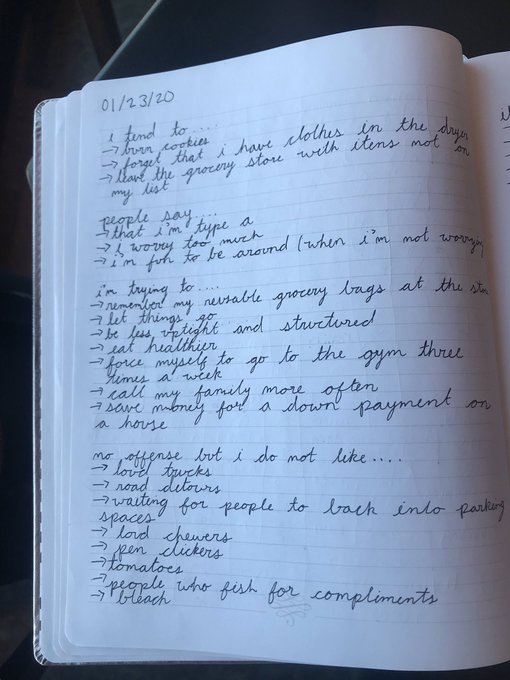
I loved this idea and toyed with it in my own writer’s notebook. I focused on the sentence starters:

  • I tend to….
  • People say…
  • I’m trying to….
  • No offense but I do not like…

That last sentence starter was my favorite because I got to explore feelings I had never thought of before. I like the thought of these sentence starters because I feel like everyone would have something to say about each one. They are also good conversation starters. Thus, I would invite my students to finish these sentence starters in their own writer’s notebook. I’m interested in what they might say.

Other entries in Textbook Amy Krouse Rosenthal include her assessment on when she transitioned from child to adult. For her, this meant that she threw away the empty granola box after she took out the last granola bar. I thought this was a comical and interesting assessment of adult responsibility.

Last week, I started reading Brown Girl Dreaming by Jacqueline Woodson. I think that this book connected to Amy Krouse’s book because, so far, Brown Girl Dreaming has been about Jacqueline’s identity. Part one began with her recounts of her early childhood. Jacqueline specifically questions her identity and who she will become on page four. “I don’t know if I’ll be strong like Ruby/ I do not know what the world will look like/when I am finally able to walk, speak, write/…”

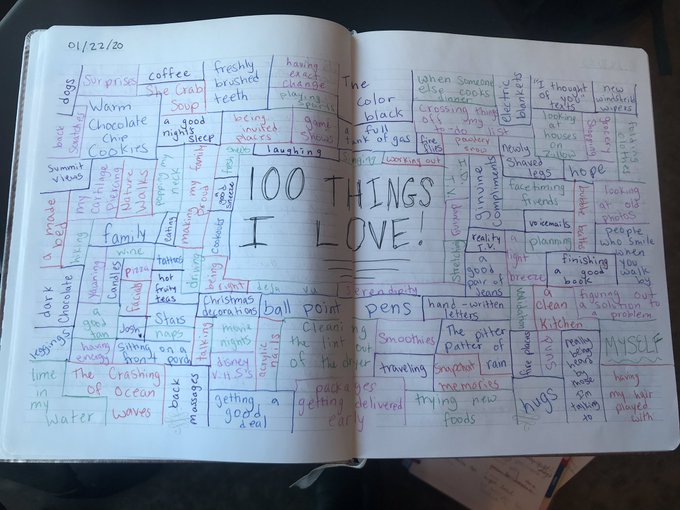
And even more so, I connect with these books. Who hasn’t questioned their identity? Who hasn’t wondered what they will grow up to do or how they will act? At twenty-two years old I still wonder some of these things. These thoughts inspired me to write a few entries into my writer’s notebook. One of them pictured below:

I think that this entry would be a good one to launch the writer’s notebook. Children love talking about themselves, and I believe that they would find it fun to try and identify 100 things they love. It’s also a positive way to start a writer’s notebook. And, it helps students see what makes up their identity. Do they love their curly hair? Or do they love how they act towards a new friend at school? Their maps would also be fun to share with others. The teacher could also participate and share some of his/her loves. In addition to helping students learn about one another, this entry would also foster a relationship between teacher and student – which is undeniably of upmost importance.

Rosenthal, A.K. (2016). Textbook Amy Krouse Rosenthal: Not exactly a memoir. New York, NY: Dutton.

Woodson, J. (2014). Brown girl dreaming. New York, NY: Penguin Books.

Writer’s Notebooks & Serendipity

I started keeping a journal on January 1st, 2019. It was my New Year’s resolution to document my thoughts and feelings on a regular basis. I had no strict rule- such as writing in it every day. I didn’t even make myself stick to a schedule of writing in it at a certain time. I just asked myself to write when I felt compelled to do so. I was struggling with bouts of anxiety and I found myself writing in my journal when I was going through my weak points— usually every couple of days and at random hours of the night. I am, however, happy to say that this is the first New Year’s resolution I can remember sticking to. It is now almost the second month of 2020 and I am still writing in my journal.

The journal is black, leather, and small, maybe five by eight inches. It has an elastic strap to secure it shut, and it also has a small black ribbon that can be used to hold your place in all of the pages. I think I liked it because it was small. It wasn’t so intimidating to ask myself to write a whole page, because a whole page didn’t look like very much.

With all of the negativity in that journal, I vowed to fill the rest of its pages with positivity this year. Although, now I almost think that this particular journal’s purpose was to hold all of that negativity for me, so that it no longer plagued my soul.


I am now starting a writer’s notebook. This notebook has some similarities with my current journal. This notebook has a leather outside, and it too contains a ribbon that can be used to mark your place. However, this notebook is pink, with a big “XO” on the front. It does not have a contraption to seal it shut. To me, this is symbolic. My journal is used to house my skeletons, things I want to keep secured away. My notebook doesn’t need shutting, because it will contain happy thoughts or moments. My notebook is much larger than my journal, for I hope that the happy moments will outweigh the moments in my journal.

I’m four pages into my writer’s notebook, and I’ve found it challenging to fill up all of the space, considering I’m used to a much smaller writing space. And, though only four pages in, I have a sense of accomplishment viewing all of the cursive I have written across the pages. When I get over the initial fear of sharing my writing, maybe I’ll post one of the pages on this blog.


SERENDIPITY

Ser-en-dip-i-ty (n.) : the occurrence and development of events by chance in a happy or beneficial way (https://www.lexico.com/en/definition/serendipity)

In Textbook Amy Krouse Rosenthal, serendipity is ultimately described as a happy coincidence. One of Rosenthal’s stories involves wanting to give a fan in a crowd a snow globe ring. In the end, she discovers that the lady that receives the ring has the same birthday as her! This is an example of serendipity.

On page 24 of Textbook Amy Krouse Rosenthal, the phenomenon is also described as when you notice something, and when you’re on the lookout for it, you tend to find it. I have experienced something similar when it comes to cars. When my sister turned sixteen and got her first car, it was a 2005 Toyota Scion. I remember thinking that her car looked funny, small and kind of boxish. I had never seen a car like it before. Suddenly, I began to see many of those cars around town and on the highway. I was seeing that car everywhere. I was unconsciously on the lookout for that car, and so I found them, a lot of them.

This phenomenon makes me think of how “things happen in threes”. I’ve heard the phrase many times. Say my car got a flat tire. I get nervous because I know that bad things tend to happen in threes. So, two more unfortunate things occur. Maybe I only recognized these two occurrences as negative because I was looking to find two more negative occurrences. Since I was on the lookout for them, I found them.

Maybe this is where positive mindsets come into play. If you are looking for positive things to happen, they will. If you’re looking up when you’re walking, rather than looking down at the sidewalk, you may discover a friend who is also out walking on a sunny day. A serendipitous moment.

It just goes to show the power of positive – and negative – thinking.

With hope, my writer’s notebook will turn me into a more positive thinker, finding the joy in simple moments and encouraging serendipitous moments.

Rosenthal, A. (2016). Textbook Amy Krouse Rosenthal. New York, NY: Dutton.

“George” by Alex Gino

Alex Gino’s book, George, opened my eyes to how much we, as people, assume gender through our use of certain words. This book brought many words, that I even use with my students, to my attention. For some time, I have never thought to realize how these words might negatively affect another person. For example, the use of “boys and girls” when addressing the class, handing out a “boys” or “girls” bathroom pass, and using words like “Mr.” and “Ms”. Specifically, when my students have a question, I call on them and say things such as “Yes sir?” or “Ma’am?”. From my perspective, I thought that I was modeling respect for my students and addressing them in ways that would build trust and mutual regard. This book showed me an alternate perspective that I had not considered. And, honestly, I’m a little disappointed in myself because I always try to be conscientious of the feelings of others.

Discovering Their Identity: Using Gender Nonconforming Picture Books in Early Education Classrooms, provides information of why you should have these types of books available, and also the challenges that come with it. Evans, Gilbert, and Doyle (2017), claim that children establish their gender identity by age five. Since they have established their gender identity, they need a safe place to develop this identity further. Schools and classrooms can be that place, socially. The three challenges that the authors discuss are :

  1. availability
  2. quality
  3. teacher use

To tackle availability, the authors suggest having these books in your classroom and also providing a list of books to parents for them to have at home. In order to evaluate quality, teachers should “provide books that reflect young children’s identities and portray a range of cultures, immigration statuses, genders, socioeconomic statuses, sexual orientations, and family structures (Evans et al., 2017). Lastly, teacher use is a challenge because teachers should support every student. Since gender identity is a controversial subject in today’s society, few teachers are willing to discuss it. Personally, I understand the fear of criticism from higher ups or parents, but, how can you possibly please everyone? You will do kids a disservice if you ignore the topic when it might play a very large part of their life, like it did Melissa’s, in George.

I think that George raises awareness of the subtlety of gendered language in our society. I really enjoyed the book, mainly because I’ve never read one like it. While I do like the book, I would be a little concerned about using it in my classroom, because Melissa’s anatomy is brought up on more than one occasion. I worry about the appropriateness of the book for a classroom for this reason, not because gender identity is discussed.

While I’m a little apprehensive of using it in my classroom, I do love the themes. This book touches on many themes. This list is a few I identified:

  1. Be who you are. (A theme the author put on the back of the book.)
  2. Always support your friends, you never know how they may be feeling.
  3. Be accepting of others.
  4. Don’t be afraid to challenge something you don’t believe in.
  5. Persevere and you will succeed.

For more information on teaching discussing gender identity, and for two suggested picture books, click here: http://www2.ncte.org/blog/2019/10/discussing-gender-binary-topics-elementary-students/

The website above taught me something that I did not know about books on gender identity:  “school administrators often prohibit librarians from using school funds in order to purchase books on these topics for their students”.

While I do think making your classroom a safe and inclusive place should be a top priority, I think that we, as a society, are still figuring out how to do this without ruffling feathers and stepping on so many toes. Although I am hopeful, I don’t know if that will ever be a reality. Even if it is not, teachers still have a responsibility to be critical and help their students become empowered citizens.

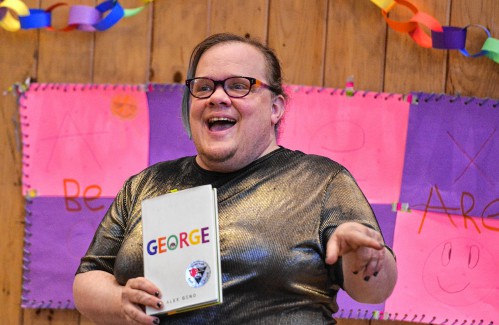
Author Alex Gino with their book, George. Retrieved from: https://www.gazettenet.com/Author-o-George–middle-school-novel-of-a-transgender-student-read-sin-Amherst-8927506

Gino, A. (2015). George. New York, NY: Scholastic Inc.

Doyle, T., Evans, S., & Gilbert, S. (2017). Discovering Their Idenitity: Using gender nonconforming picture books in early education classrooms. Literacy Today.

Kid Activists

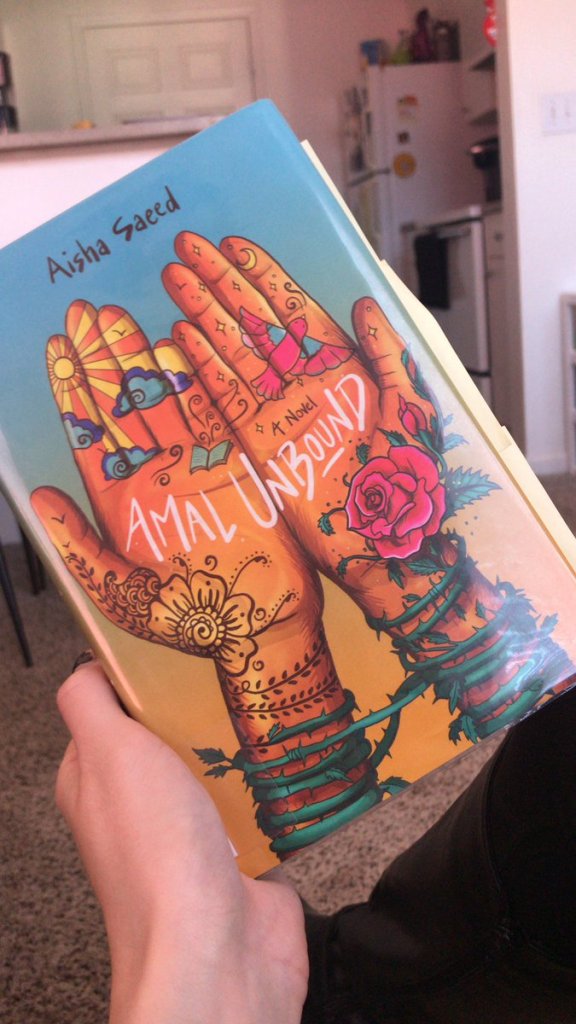
This past week, I read Amal Unbound, by Aisha Saeed, and Iqbal, A Brave Boy From Pakistan / Malala, A Brave Girl From Pakistan, by Jeanette Winter.

First off, Amal Unbound was awesome!!!! I loved the story and the theme about the importance of sticking up for yourself and pushing back against injustice. I admired the complex character that was Amal, a young woman who valued education and questioned gender roles. She enjoys school and learning, and she hopes to become a teacher someday. When her mom has another baby, her family needs her to stay home from school and help around the house. Amal’s father is adamant that she stays home to assist. Amal questions this and wonders if she would be allowed to go to school if she were a boy. She speculates that, since she is a girl, she is expected to stay home to cook, clean, and take care of her younger siblings.

Lots of existential topics were present throughout the story, some of which were:

  • the unfairness of life
  • the meaning of freedom
  • is it better to forgive than to hold onto animosity?
  • being appreciative of what you have when you have it
  • can one person make a change?

This book is about a young girl who overcomes her situation in order to find her way back home.

My favorite quote from the book comes from page 207. It reads:

“If everyone decided that nothing could change, nothing ever would.”

Jeanette Winter’s book is also about young activists, both Malala and Iqbal see an injustice and do something about it. Both speak out about their cause. Malala’s cause is women having the right to an education, and Iqbal’s is about child labor.

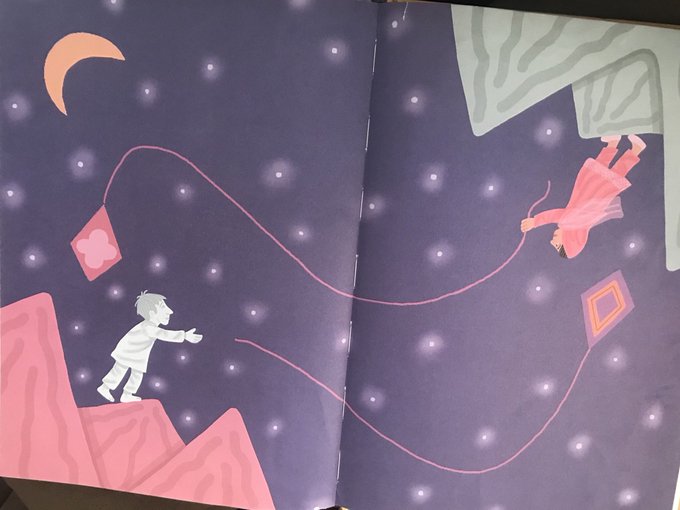
Winter’s book contains two stories. The front cover of the book starts Malala’s story, and the reverse side starts Iqbal’s story. In the middle of the book, is the illustration below.

This picture struck me because Iqbal is grey, and he has let go of his kite. Malala is in color, and she is still holding onto a kite. I’m speculating that Iqbal may be grey because he has passed. In his efforts to speak out against child labor, he was shot and killed when he was twelve. Malala was shot while speaking out for her cause, but she survived. I’m wondering if maybe Iqbal has released his kite because he is no longer on Earth, able to fight for his cause. Malala is alive and still fighting for her cause (the kite). Maybe the kite is a symbol. Both Malala and Iqbal have kites, although different. Just like both had causes, though different. While they fought for different things, they both fought back for the rights of children. I wonder about the significance of the mountains that they are standing on. The mountains are the color of the other child. Malala is standing on grey mountains and Iqbal on pink mountains.

To view Malala’s story, click here: https://www.youtube.com/watch?v=CXvs1vwiD0M

To read about current child labor issues, click here: https://www.hrw.org/topic/childrens-rights/child-labor#

Before each story, there is a short backstory along with the quote, “Let us not pray to be sheltered from dangers, but to be fearless when facing them.” I love that Winter chose to include this quote because I think it speaks volumes. As human beings, we should not be ignorant to what is going on around us, even if it is negative. While there is a lot of bad in the world, we can combat it by speaking out or fighting back. In doing so, we should be brave.

Both of these books would motivate students to take a stand against injustice. Both books feature characters that are young in age, and therefore relatable to students. Laminack and Kelly claim that children see injustice more easily and more clearly than many adults do and that they’re more likely to become upset with situations they deem “unfair” (p. 84). These stories show that you don’t have to be an adult to make a difference, kids have powerful voices that should be heard too

Saeed, A. (2018). Amal Unbound. New York, NY: Nancy Paulsen Books.

Winter, J. (2014). Malala/ Iqbal: Two Stories of Bravery. New York, NY: Beach Lane Books.

Laminack, L. & Kelly, K. (2019). Reading to Make a Difference: Using Literature to Help Students Speak Freely, Think Deeply, and Take Action. Portsmouth, NH: Heinemann.

Design a site like this with WordPress.com
Get started